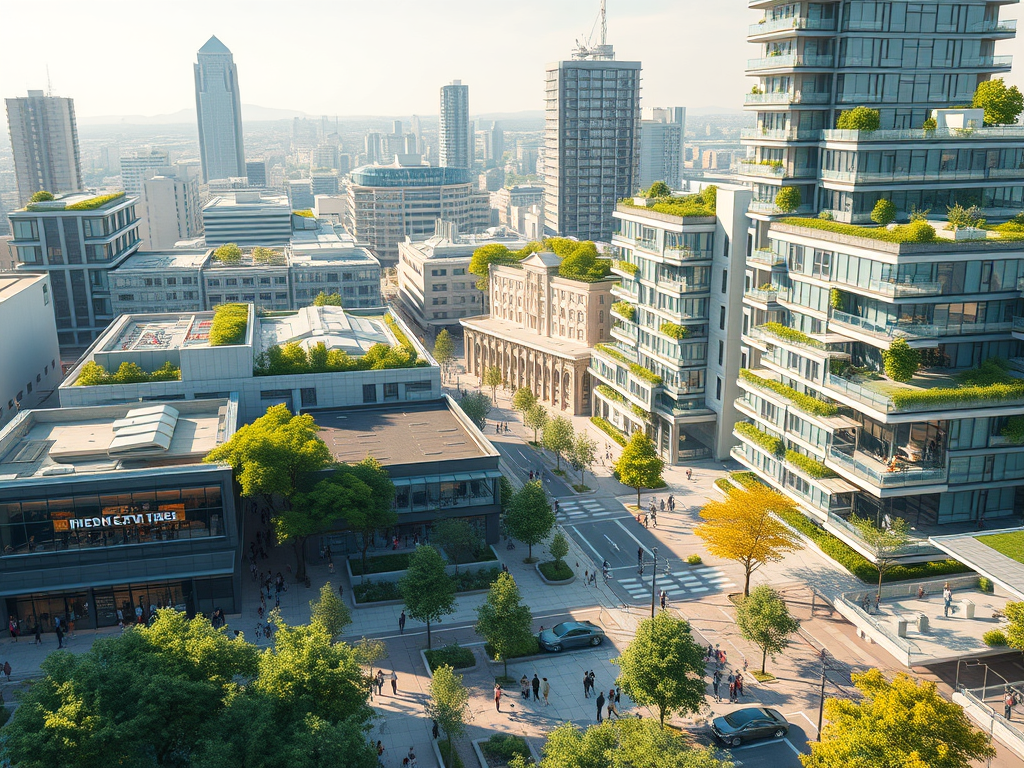
For too long, we’ve treated architecture as art and city budgeting as accounting. In reality, they are two sides of the same coin. A beautiful building that ignores its neighborhood is just “ego-tecture,” and a city budget that ignores long-term maintenance is a ticking time bomb.
To build a city that breathes, we must master the intersection of the blueprint and the balance sheet.
1. Beyond “Ego-tecture”: The Building as a Citizen
The era of the “starchitect” dropping glass-and-steel spaceships into historic neighborhoods is over. Modern urbanism demands that a building act as a functional citizen of its street.
- The Contextual Handshake: Integration isn’t about blending in; it’s about contributing. Does the building provide shade? Does its ground floor invite pedestrians in, or is it a blank concrete wall? Effective design treats the urban landscape as a living organism where every new structure must provide a “net gain” to the public realm.
- Sustainability as Survival: We’ve moved past green-washing. Sustainable architecture is now a hedge against future volatility. By investing in carbon-neutral materials and passive cooling, developers aren’t just saving the planet—they are de-risking the building’s financial future against rising energy costs.
2. The Death of the Commute: The 15-Minute Revolution
The most valuable commodity in a modern city isn’t real estate; it’s time. The “15-Minute City” model uses mixed-use development to kill the soul-crushing commute.

The Mixed-Use Ecosystem
| Element | The “Human” ROI | The “City” ROI |
| Residential | Shorter commutes, more sleep. | Stable, 24/7 tax base. |
| Commercial | Jobs within walking distance. | Reduced wear on road infrastructure. |
| Public Space | Mental health and social “glue.” | Higher surrounding property values. |
Public Space isn’t “Empty” Space: A park or a plaza is a city’s lungs. Without these “third places,” urban density becomes urban claustrophobia. Thoughtful planning ensures that social interaction isn’t an afterthought—it’s the primary goal.
3. The Gritty Reality: Financing the Dream
A vision without a budget is just a hallucination. The most innovative cities are those that treat their funding sources with as much creativity as their skylines.
- Public-Private Symbiosis: We are seeing a rise in “Incentive Zoning,” where developers are allowed more height or density in exchange for building public libraries or affordable housing units. It’s a win-win that builds infrastructure without draining the treasury.
- The Social Cost-Benefit: Traditional budgeting asks, “How much does this cost?” Modern planning asks, “What is the cost of NOT doing this?” A new bike lane might cost $1M, but if it reduces traffic accidents and healthcare costs by $5M over a decade, it’s a massive profit for the city.
The Golden Rule of Urban Finance: Never fund the construction of something you haven’t already funded the maintenance for. Sustainable budgeting is the difference between a landmark and a ruin.
4. The Power of the People: Participatory Budgeting
The “top-down” approach to city planning is dying. When residents have a direct say in how funds are allocated—known as Participatory Budgeting—projects gain a level of “neighborhood soul” that no consultant can replicate. It fosters transparency, reduces NIMBYism (Not In My Backyard), and ensures that the city grows with its people, not at them.

The Verdict: Resilience by Design
The cities that will survive the 21st century aren’t the ones with the tallest towers; they are the ones that mastered Integration. By weaving together architectural beauty, environmental stewardship, and fiscal discipline, we create more than just a place to live—we create a legacy.


Leave a Reply