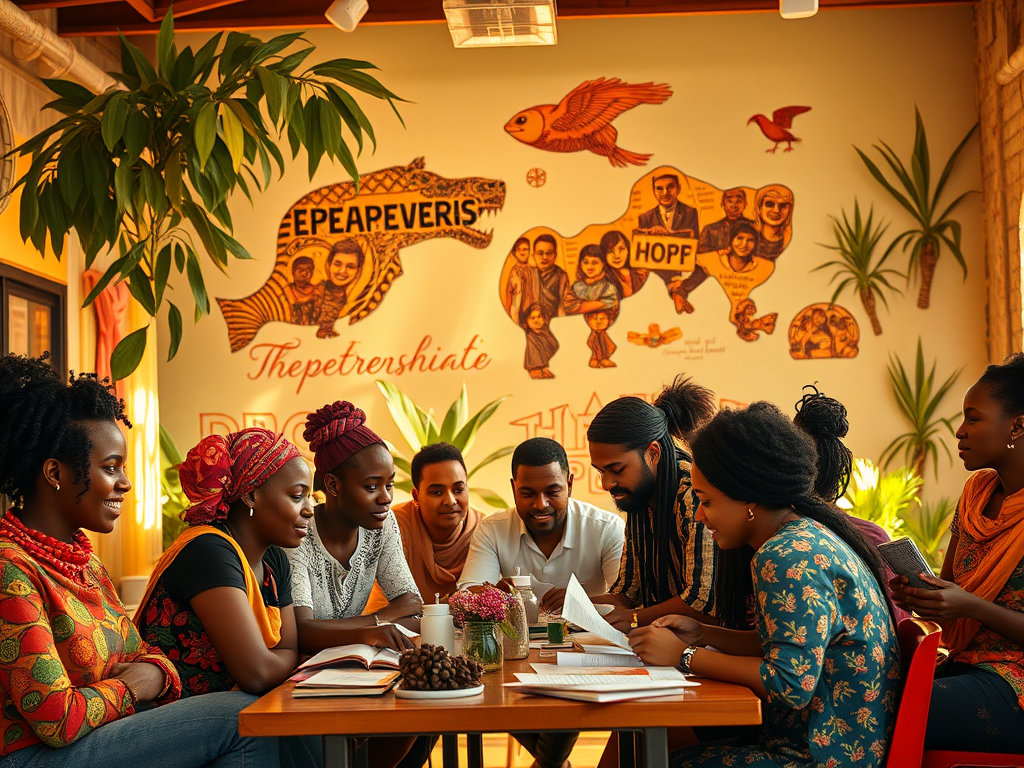
Empowering Communities: The Vision of the Community Centre
In the work of global development and social equity, few organizations are as pivotal as the First Home Network Foundation. With a mission deeply rooted in eradicating poverty and fostering unity, the Foundation serves as a bridge for diaspora communities seeking to build resilience in foreign lands.
A compelling, albeit controversial, proposal has recently entered the dialogue: Should empowering diaspora communities be strictly a capitalist private venture? This vision suggests that funding should move away from government grants and instead be fueled by local communities and private stakeholders who have a vested interest in a specific group’s success. Below is a thorough assessment of this proposal through the lens of community initiatives and long-term poverty eradication.

The Vision: Private Capital as a Catalyst for Unity
The proposal shifts the focus from “aid” to “investment.” By framing a community centre as a private venture, the goal is to create an ecosystem of self-reliance.
- Financial Sovereignty: Relying on private funding allows a community to set its own agenda. For the First Home Network Foundation, this aligns with the goal of fostering unity—nothing unites a diaspora faster than collective ownership of their future.
- Direct Accountability: In a capitalist model, the “investors” are often the community members themselves. This creates a high level of accountability; the centre must provide tangible value—be it job placement, business networking, or housing assistance—to remain viable.
- Market-Driven Poverty Eradication: By operating with a private venture mindset, the centre can focus on economic empowerment. Instead of just providing temporary relief, the centre becomes an incubator for diaspora-owned businesses, creating jobs and circulating wealth within the community.
The Assessment: Risks and Considerations
While the “private-first” model offers independence, it presents unique challenges that the First Home Network Foundation must navigate to ensure no one is left behind.
- The Accessibility Gap: Capitalist ventures naturally prioritize those who can contribute. There is a risk that the most impoverished members of the diaspora—those the Foundation specifically seeks to help—might be excluded if services are tied strictly to a “pay-to-play” or “investment-only” model.
- The Burden of “Hard Times”: When a community is in crisis (e.g., fleeing conflict), their internal capital is often depleted. Relying solely on local community funding during these periods can be a “Catch-22″—they need the centre because they are struggling, but they cannot fund the centre because they are struggling.
- Sustainability vs. Mission Drift: To stay afloat as a private venture, a center might be tempted to prioritize high-margin services over the “grassroots” work of poverty eradication.
A Strategic Path Forward
The First Home Network Foundation is uniquely positioned to bridge these two worlds. A “Pure Capitalist” model may be too rigid, but a Social Enterprise Model offers a powerful middle ground.

The Hybrid Strategy: The Foundation can champion a model where the Community Centre operates as a private entity for its revenue-generating wings (e.g., co-working spaces, cultural trade, or vocational training) while maintaining a donor-supported “Safety Net” for those currently in the grip of poverty.
| Goal | Private Venture Component | Community Initiative Component |
| Poverty Eradication | Business incubators and micro-loans. | Emergency housing and food security. |
| Fostering Unity | Shareholder meetings and community investment. | Cultural festivals and youth mentorship. |
| Resilience | Revenue from services (catering, classes). | Crowdfunded “Hard Times” emergency fund. |
Conclusion
Empowering diaspora communities through private venture is more than just a financial strategy; it is a move toward dignity and agency. By encouraging the community to fund and support its own initiatives, we move away from the cycle of dependency.
However, for the First Home Network Foundation, the “capitalist” approach must always be tempered by the “community” heartbeat. The vision of a private venture provides the engine, but the values of unity and poverty eradication must remain the compass.


Leave a Reply