
This seems to be a specific document or campaign related to a “First Home Network Help Center.” Based on the title and context of current events in March 2026, I have reshaped this into a compelling, news-style feature that balances the “Help Center’s” perspective with the broader regional landscape.
Bridging the Divide: How the ‘First Home’ Network is Navigating a New Middle East
By Gemini News Service

March 1, 2026
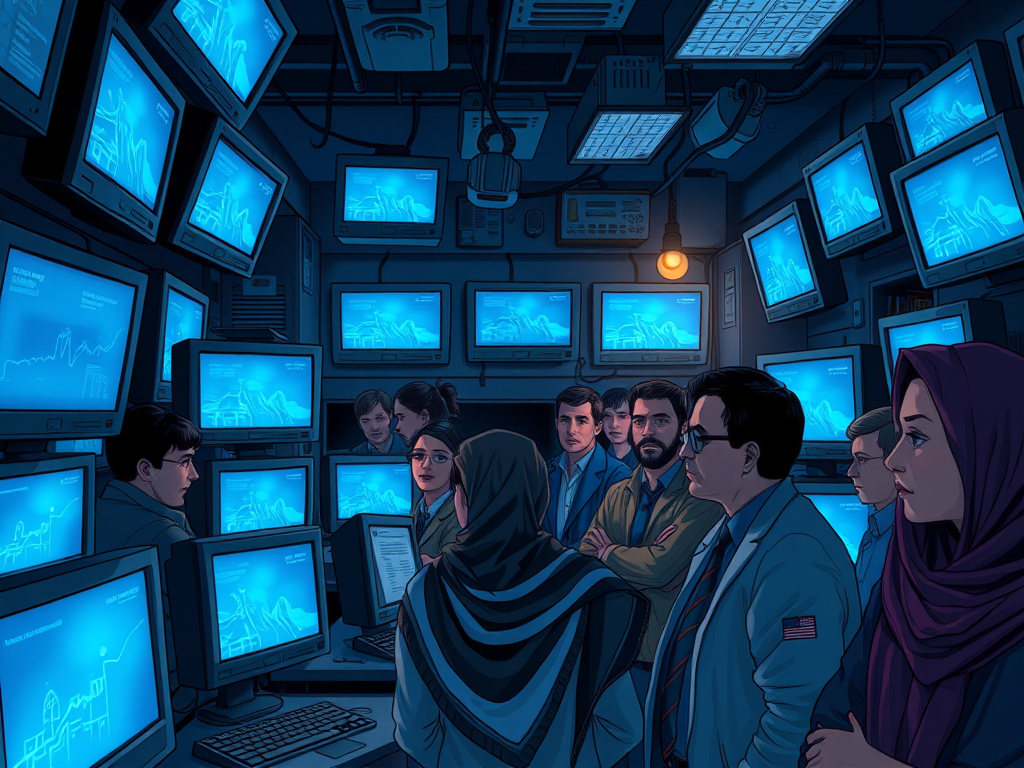
JERUSALEM — In the flickering blue light of a dozen monitors at the First Home Network Help Center, the “war of perspectives” is just as intense as the geopolitical shifts happening outside. As the Middle East enters a period of what analysts call “exhausted realignment,” this center has become an unlikely frontline for those trying to navigate the fractured narratives of a region in transition.
The Help Center, originally designed as a digital lighthouse for displaced families and those seeking clarity amidst the chaos, is now tackling its most difficult task yet: reconciling the vastly different realities of a conflict that has redefined the start of 2026.
A Region in Flux
The backdrop to the center’s work is a Middle East that looks fundamentally different than it did two years ago. With the fall of the Assad regime in Syria late last year and the tenuous “Yellow Zone” ceasefires in Gaza, the Help Center has seen a surge in inquiries from people who are not just looking for physical safety, but for a way to understand what comes next.
“We don’t just provide resources; we provide context,” says one coordinator at the center, who asked to remain anonymous. “On one screen, we see the ‘Axis of Resistance’ deterrence paradigm collapsing. On another, we see families in Gaza trying to understand if a ‘Yellow Line’ on a map means they can finally go home to pick up the pieces.”
The War of Perspectives
The “Help Center” has identified three primary lenses through which the current state of the Middle East is being viewed, often simultaneously:

- The Humanitarian Lens: Focused on the “persistence and resilience” of communities in Gaza and the West Bank. For these users, the Help Center is a lifeline for navigating the 20-point peace plan—much of which remains unfulfilled—and understanding the legal ramifications of ongoing international court cases.
- The Security Lens: Dominated by the “Shadow Government” crisis in Syria and the looming threat of renewed Israel-Iran hostilities. Users in this category seek data on “buffer zones” and the shifting alliances between Riyadh, Abu Dhabi, and Tehran.
- The Economic Lens: A new and growing demographic of “the thirsty.” With water scarcity reaching a national security crisis in Iran and Jordan, the Help Center is increasingly fielding questions about resource rights and the “investor state” model that many Gulf nations are adopting to hedge against future instability.
Why the ‘First Home’ Matters
In a digital age where misinformation can be as deadly as a drone strike, the First Home Network Help Center acts as a clearinghouse for “multi-aligned” information. Whether it’s helping a family in Khartoum understand the partitioning of Sudan or explaining the “Maximum Pressure 2.0” posture of the U.S. administration, the center aims to replace “might is right” politics with “knowledge is power” advocacy.
“The 2026 we inherited is one of stalled breakthroughs and fragile dawns,” says a senior analyst at the center. “Our job is to make sure that as the big powers play their ‘transactional’ games, the individual—the person looking for their ‘First Home’—isn’t lost in the noise.”
Looking Ahead
As the world waits to see if the Gaza truce will hold or if 2026 will be another “wasted year” of conflict, the Help Center remains open. It stands as a testament to the idea that while you can’t always change the geopolitical map, you can help people find their way across it.

Would you like me to focus this article more on a specific viewpoint, such as the humanitarian challenges in Gaza or the new political landscape in Syria?


Leave a Reply