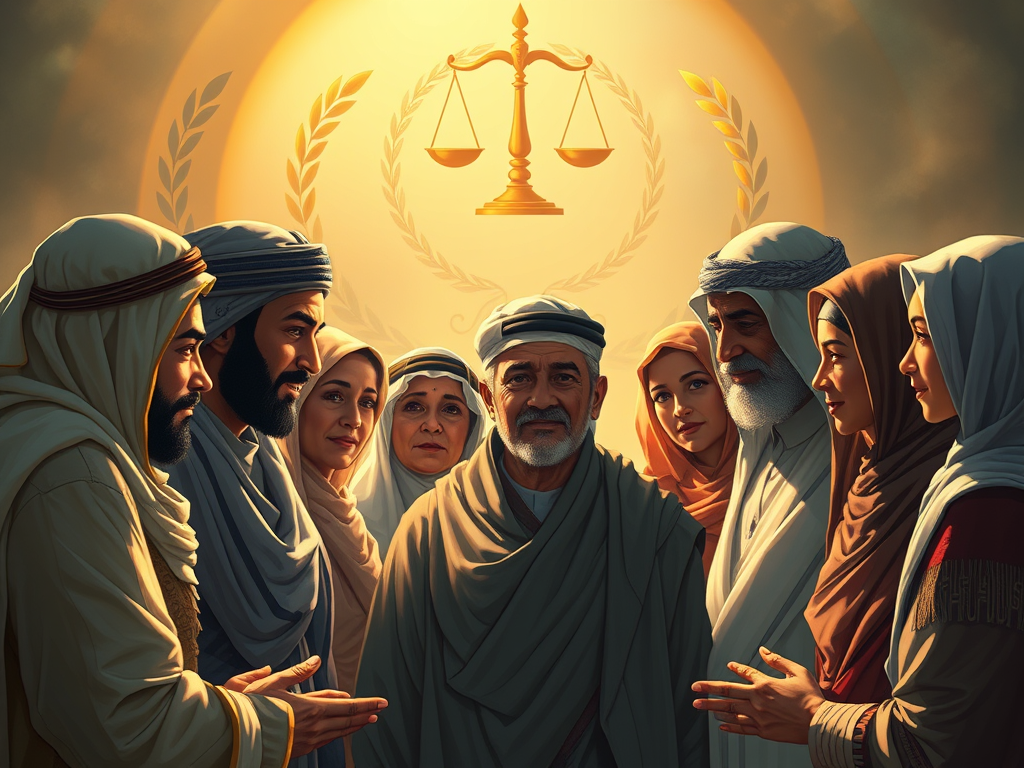

Unifiying Justice Systems around the World for building trust and reliability
Why is it important to unify laws? Unifying laws is crucial because it creates consistency and equity among individuals, allowing for a shared understanding of rights and responsibilities. This uniformity not only fosters a stable legal environment but also cultivates trust among citizens, leading to a more cohesive society. Such unity can pave the way for a more just society, reducing conflicts and fostering cooperation among diverse communities. By creating a legal framework that respects both Islamic principles and humanitarian values, we can build a foundation for peace and mutual respect that transcends cultural differences. Additionally, when laws are harmonious, they facilitate smoother interactions across borders and cultures, making it easier for individuals to navigate legal systems while respecting the nuances of various traditions.

I don’t know anything that contradicts humanitarian laws in Islamic Sharia; in fact, Islamic Sharia is more advanced in many ways than any human-made law. Time will tell whether this perspective will gain wider acceptance in an increasingly interconnected world. The current laws cannot unite us; therefore, we urgently need to come to common terms again to foster a more inclusive and harmonious society. I would start by justifying what Islamic law encompasses and how it intersects with humanitarian law—through thoughtful discussion and analysis, artificial intelligence can sort out the whole thing from A to Z, presenting a clearer picture of both frameworks. By engaging in comprehensive dialogues and employing innovative technologies, we can foster an environment where misconceptions are addressed, and mutual understanding is cultivated. Only then can we aspire to create a truly equitable global legal landscape that embraces the best of both Islamic and humanitarian principles.


Treaties are formal, legally binding agreements between two or more entities subject to international law, primarily sovereign states and international organizations.1 Think of them as contracts on the global stage. They can go by various names – conventions, agreements, protocols, covenants – but the key is their binding nature under international law.2

Now, how do these agreements shake up the geopolitical scene? Let’s dive in:
Setting the Stage:
- Establishing Rules of the Game: Treaties create frameworks for how nations interact.3 They define rights, responsibilities, and acceptable conduct across a spectrum of issues, from trade and human rights to environmental protection and the use of force.4 Without them, it’d be a much more chaotic world.
- Shaping International Law: Treaties are a primary source of international law.5 They codify existing customs and establish new legal principles that govern state behavior.6 Landmark treaties like the Vienna Convention on the Law of Treaties even set the rules for how treaties themselves are made and interpreted.7
Geopolitical Impact in Action:
- Security and Stability: Alliances and defense treaties (like NATO) can redraw power dynamics and deter conflict by creating mutual security guarantees.8 Disarmament treaties aim to reduce the proliferation of weapons, impacting military capabilities and strategic balances.9 The Antarctic Treaty, for example, demilitarized an entire continent, preventing potential Cold War clashes.10
- Economic Interdependence: Trade agreements (like free trade areas) can foster economic ties, creating dependencies and influencing political relationships.11 These agreements can shift economic power and create new blocs of influence.
- Defining Boundaries and Sovereignty: Treaties establish borders and recognize state sovereignty, which are fundamental to the international order.12 Territorial disputes are often resolved (or sometimes ignited) by treaty agreements.13
- International Cooperation: Treaties are essential for tackling global challenges that transcend borders, such as climate change (like the Paris Agreement), pandemics, and transnational crime.14 They provide the legal basis for coordinated international action.15
- Establishing International Organizations: Many significant international organizations, like the United Nations, are established by treaties.16 These organizations then become key players in the geopolitical landscape, shaping norms, providing platforms for diplomacy, and sometimes even intervening in conflicts.17
Think of it this way: Every treaty signed is like a piece moved on the global chessboard. Some moves are small, affecting bilateral relations on a specific issue. Others are major, reshaping alliances, trade routes, or even the fundamental principles of international law. By understanding treaties, you gain a crucial insight into the motivations, strategies, and long-term goals of the actors on the geopolitical stage.


Leave a Reply